
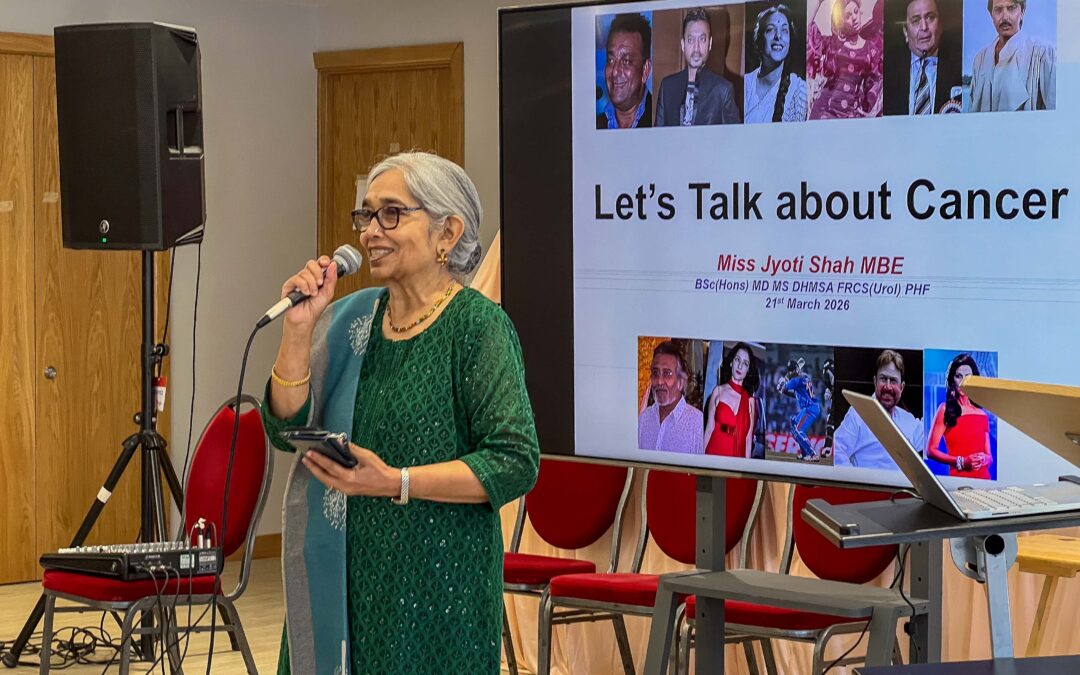
Over the past year, I’ve stressed again that ‘Fighting Prostate Cancer’ has to do more grassroots campaigns. If we want earlier diagnosis and better outcomes, we have to meet people where they already gather—community centres, places of worship, barbershops, workplaces, local charities, and living rooms.
The community angle brings real stories, clear slides, and time for private questions afterwards, because trust is built slowly, face-to-face.
That is why I am giving more and more grassroots awareness presentations across our communities. Each talk is practical: what the prostate is, what symptoms to take seriously, what a PSA test is and isn’t, and how to prepare for a GP appointment with confident questions. I also spend time on the emotions—fear, embarrassment, and the quiet pressure many men feel to “just get on with it.”
I’m placing special focus on ethnic communities because I’ve seen how language and culture can become barriers to timely care. When information is only in English—or only in medical jargon—people disengage. So I’m working to deliver sessions in Asian languages where possible, and to provide translated handouts and simple explanations that families can discuss at home. The goal is not to overwhelm; it’s to empower.
These sessions are not lectures. They are conversations. People ask about urinary changes, diet, stigma, relationships, and what to do if they’re worried but don’t want to “make a fuss.” We talk about family history, advocating for yourself, and supporting someone through tests and treatment.
Every presentation strengthens the network: community leaders, health champions, carers, and survivors connecting with one another. That is how change reaches the roots.